Unleash the Dragon


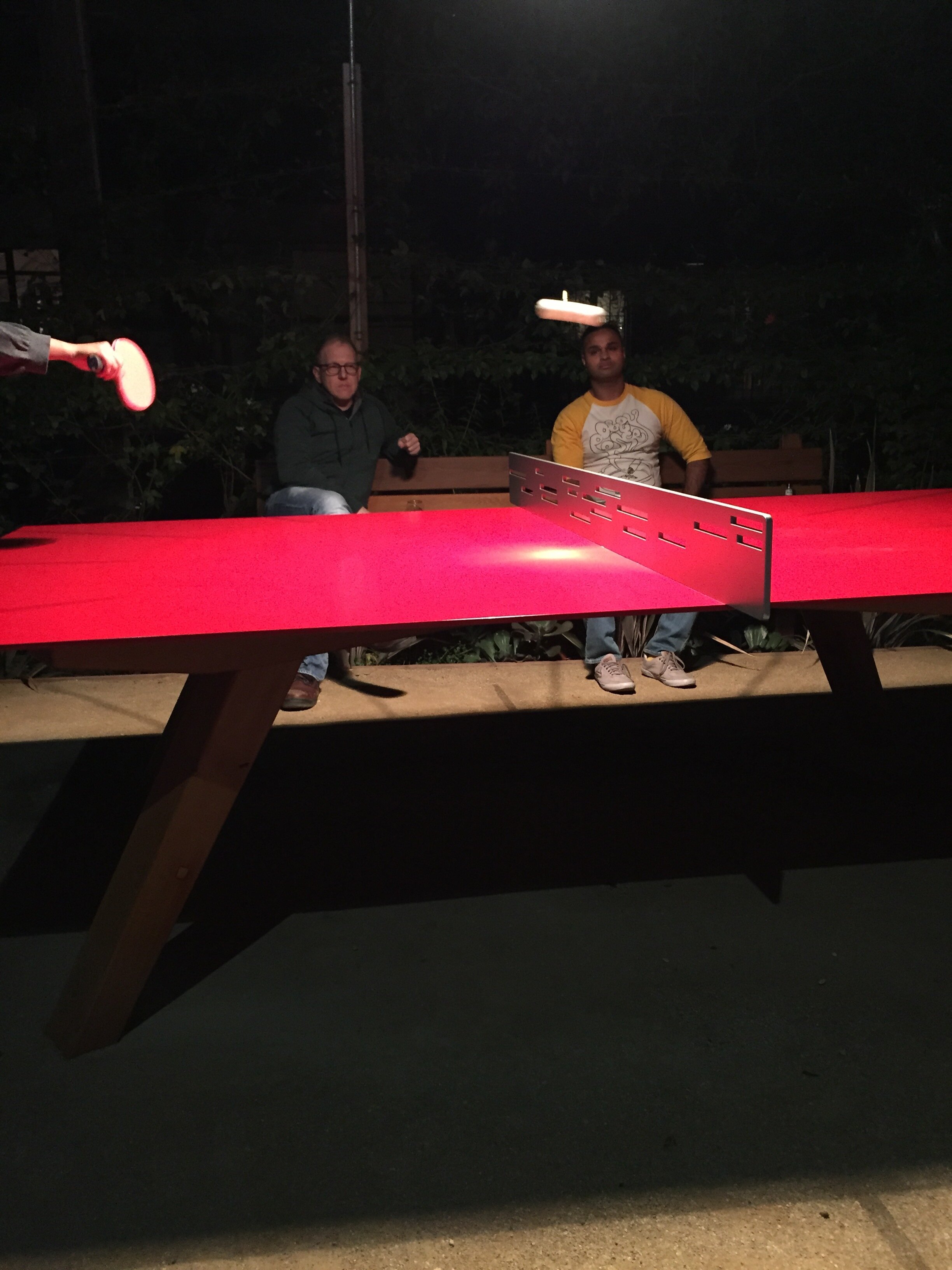
Yes, there are four of me in that picture. Matt Lee of Sights&Sounds (Wedding Photography) took that shot in my kitchen with my new Dragon Table and my Boxen Island. Splitting myself into four was a little painful but I think the photo was worth it. It illustrates how the playful, practical, imaginative, and realistic sides of me all play a role in creating my designs. Click here to see higher resolution pictures of this and the other great photographs Matt took of my new work!
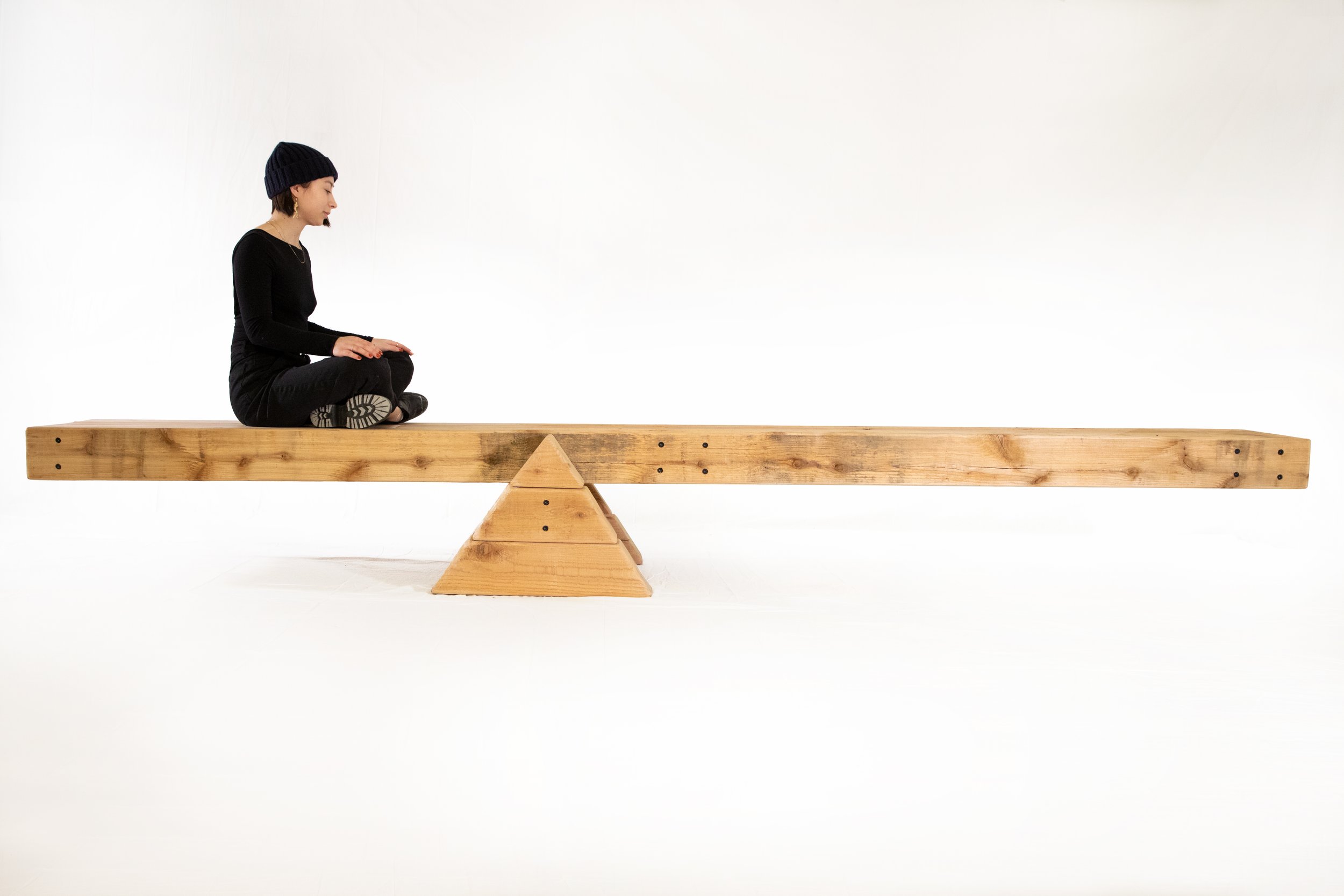
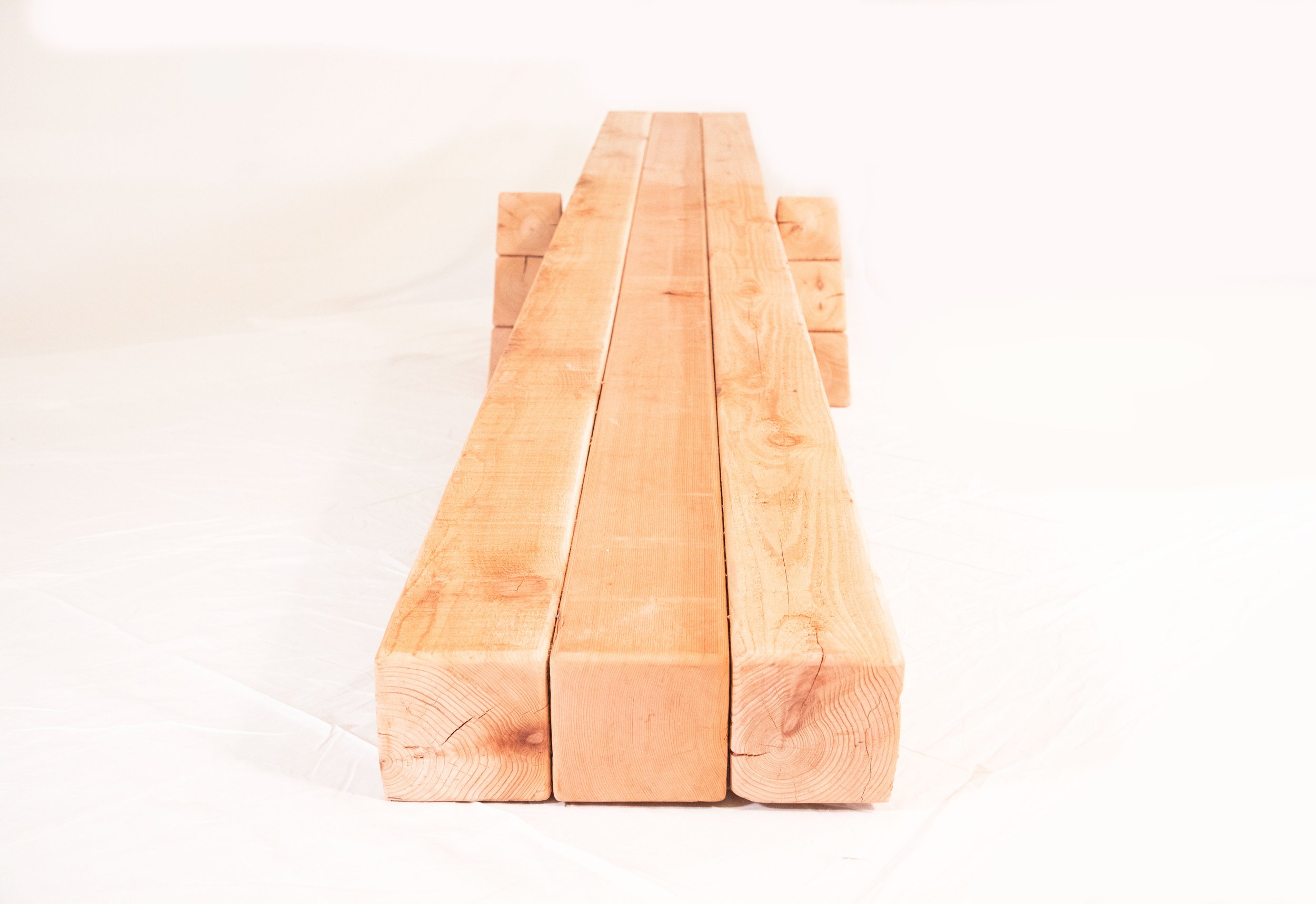
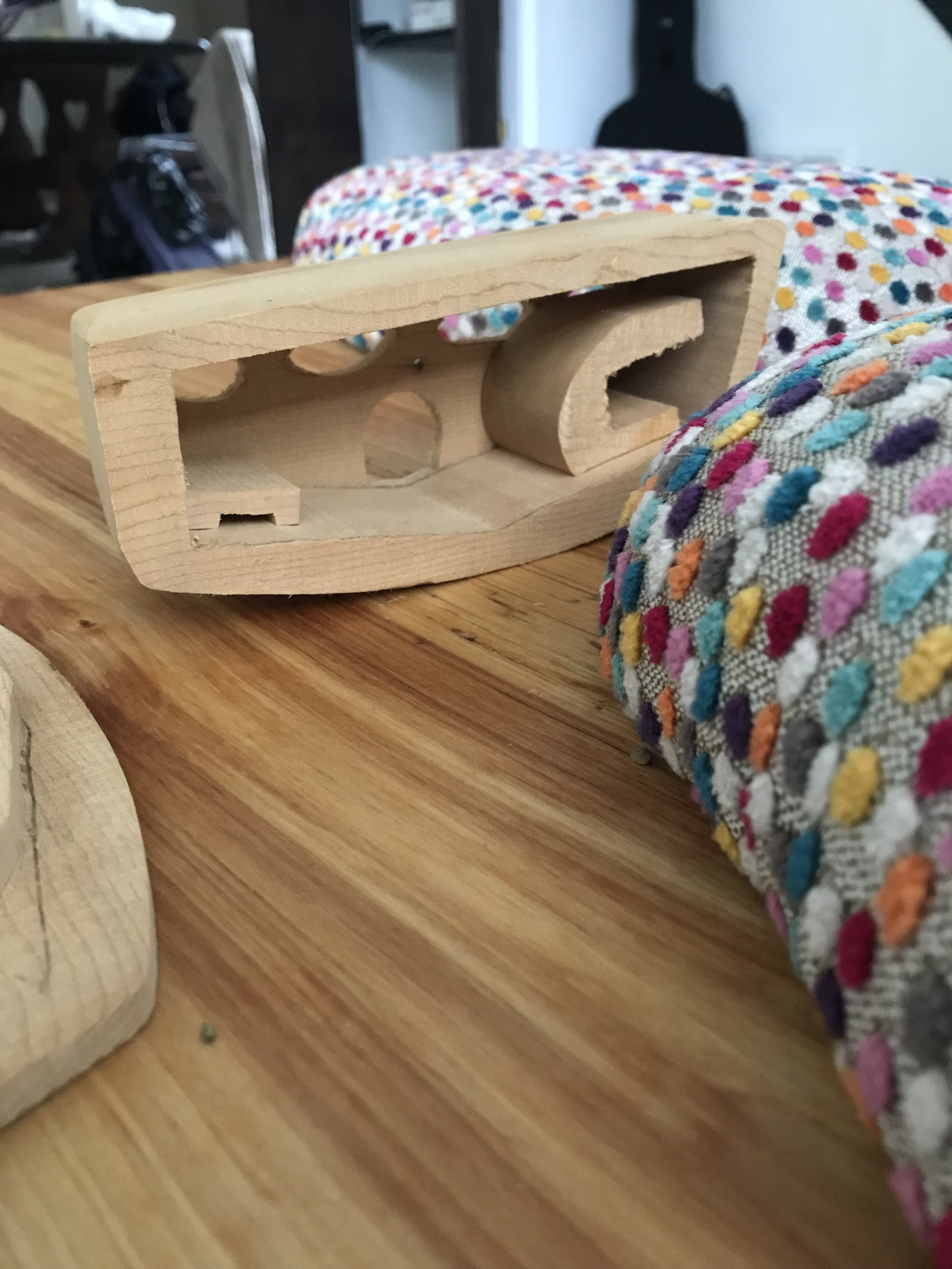
The Dragon table is a series of two seven foot long tables that can be arranged end to end to make one 14′ X 3 1/2′ table or placed side by side they make a 7′ X 7′ square table. I reclaimed the wood from a renovated building in Downtown LA on Alameda street a few blocks from my loft with the help of my assistants Magenta Pinruethai and Charles Corbin. The table top has a hand planed finish that gives the grain a depth and a clarity that cannot be achieve with sand paper. The leg joints are hand chiseled and the legs are permanently locked into place with hardwood wedges visible in the top of the table. The bottom of each table is not only slightly arched in all four directions but also carved with bubbles. Extending in a grid along the curving surface the bubbles looked like the scales of dragon when I finally put the two finished tables together. Hence the name. However, the bubbles were inspired by textures like bubble wrap, the rubber nubs on a stainless steal gas peddle and the yellow non slip grips by the edge of subway and train tracks, but not really mythical beasts.
Why carve bubbles into the bottom of the table? Because it is fun! The half bubbles on the sides of the table are hints of what awaits underneath. It is a process of interaction that might take a whole meal or glass of wine to discover but eventually wandering hands find the carvings and soon after that people are peeking underneathth to get a better view. For me that is the fun. I love the delayed tactile discovery and how the carving is temporarily veiled by the table’s utilitarian nature. I like the subtleties of the common hiding the extraordinary.
Not only did Matt Lee take these great photographs he also shot an amazing film of the making of the dragon table, which you can watch by clicking on the picture of me cutting wood. He is a master of his craft and I am honored to have worked with him. He is always professional and creative despite being way to young to be this talented. Plus there is one more thing. Matt Lee, renaissance man, also drew the Dragon Table in 3d making it possible for Will Rollins of 100XBetter to mill it on his CNC Router. Click here to see a picture of 100Xbetter’s chair in Sunset Magazine. Kudos to Matt and Will for all of the amazing help they gave me!
Boxen is a line of simple case work. They are 16″ X 16″ X 16″ cubes that can be stacked to create shelving. They are made from scrap plywood reclaimed from several wood shops. Despite their inferior plywood make up, just kidding there are many virtues to plywood, the cubes are still finished with the best Hand Rubbed Tung oil money can buy to bring out the beauty and depth of the different species veneers and even enriching the MDF with a dark warm tone. They are crafted with classic casework construction and shamelessly display the natural edge of the plywood. The backs are fitted with 3/8″ opaque plexi glass that is durrable and allows light to shine through the back.
For purchasing and pricing please contact The Ford & Ching gallery. Come to Ford & Ching on March 6th to see my work in person at their Spring Cocktail Party and Launch!
Ford & Ching Website Launch

Here are some photos of the Ford & Ching Website Launch held at Kim Sing Theater. Thank you Ford & Ching and photographers TIGERTIGER for the images! You can see more photos of the party at http://fordandching.com. Above Hana from TIGERTIGER takes a photo of my 69 leg table.

This is the bottom of my newest table. The Dragon Table. It is actually only half of it. I didn’t finish the other half in time for the launch. Opps. . . I recovered the 16′ Douglas Fir beams that this table is made of on Alameda St. 2 blocks from my loft. The bottom is first rendered in 3d and carved with a milling machine. The legs are connected to the top with hand carved jointery that pierces through the bottom and shows in the table surface. Finally the top is hand planed, scraped and finished with Tung Oil. Special thanks to Magenta and Corbin for all of their hard work helping me lift and mill these beastly beams. I can’t forget Matt Lee who expertly rendered the bottom in 3d and Will Rollins from 100 X Better for his help milling the bottom.
Ford & Ching Open a New Satellite Showroom in Oakland

This August Willard Ford and Andrea Ching opened a new sample warehouse or as I like to call it “The Satellite Showroom in Oakland, California. If you happened to stop by the Los Angeles Gallery after the first week in August hoping to see my “Belly Table” I am sorry to have disappointed you because we moved it to East Bay. Don’t fret you can still see my work at the Kim Sing Theater where I just delivered my newest work “The Dragon Table.”

Here box-less F&C marshmallows are displayed in Cherry Burl bowl I spun on the lathe this summer when I visited Connecticut in July. I just want to thank Tyler Bristol for giving me a great lesson on the lathe.

To celebrate this momentous occasion I made a series of 108 limited addition marshmallow boxes. Each individual box is numbered and decorated with a imaged I burned into the wood with a soldering iron and comes complete with your very own laser etched F&C marshmallow. I know it was a lot of work but Andrea was gracious enough to provide me with enough beer to make it fun. I only burned myself once but luckily I was numb enough to not feel it. Here are few of them.


Please Check out the Dwell Blog for more images of the event. http://www.dwell.com/articles/ford-ching-comes-to-oakland.html Special thanks to Jordan Kushins from Dwell and his whole crew including Brendan Callahan from Semigood Design and Tiffany Chu for coming to the opening and making it awsome.
Marshmallow Boxes
Here you see the marshmallows naked. The poor little creatures are exposed to the elements like turtles without shells.
That is why I built the confectionery puffs a wooden shell to disguise and protect them from them from things like rain, insects, and according to one marshmallow box owner, even little brothers.
These little cubes of Douglas Fir hold exactly one marshmallow. When they are lined up together they look like a wooden quilt.
These are the lids.
In order to fully understand and study the marshmallows I branded them for tacking purposes. Although it seems cruel the marshmallows feel nothing. The high pitch squealing noises they make when the laser etches into their skin are not cries of pain rather air escaping from their soft outer puffed sugar membranes.
Here the laser brands the marshmallows lined up in rows.
These Marshmallows will be set free on the Ford and Ching Ranch and are appropriately branded F & C.
The bottom of the marshmallow shells are branded with my last name. Also for tracking purposes.
Here the boxes are on display at Dwell on Design. In the morning the table was full and two hours later the herd quickly thinned out.
Willard Ford guards the marshmallow boxes at The Dwell on Design Show.
Often marshmallow predators can become aggressive and it is not uncommon for the marshmallow owners to use necessary force to defend there herds. Here Andrea Ching is seen fending off a man who tried to take more than one marshmallow box.
Marshmallows are a common part of my culinary library. From Rice Crispy treats to Smores at a campfire I love them. When I met a friend from another country eating a smore for the first time, who had never seen a marshmallow before in her life, I suddenly recongnized how strange and wonderful this odd treat I took for granted was. The Marshmallow box allows you to see the marshmallow for the wierd squishy soft jet puff of modern confectonary glory it truely is. When the lid is removed from the box only the top third of the marshmallow sticks out making it look like a mushy button that is fun to poke. I want to thank all the wonderful people who were nice enough to talk with me and share their marshmallow stories at Dwell on Design. Plus I want to thank Andrea Ching and Willard Ford for all their hard work getting ready for the show. Plus it was Andrea’s idea to brand the marshmallow.
Here is a picture of James Peterson of ArtContraptions.com. I want to thank him because he is the secret genious who thought of branding the marshmallow with a laser and actually made it happen.
The Marshmallow Boxes were fun to make but making anything three hundred times is a lot of work. I couldn’t have done it without the help of some very great people. I want to thank my Marshmallow Crew: Magenta Pinuethai, Cheeyoon Chun, (pictured above) Ali Sykes, Chris Leese, Austin Baker, Jenny Comperda and Mat Lee for volinteering their time and helping me create my stupid ideas. Without them the marshmallow boxes would have just been a thought. Thank You Everybody! You are all number one! Even though technically that is impossible. Unless. . .you are all number one at different things.
New 69 Leg Table
Here is the new 69 Leg Table. The top is made from old growth Douglas Fir recycled from a building in Hollywood. The Legs are made from Hard Maple that I recycled from an old work bench top that was delaminating from too much use. Thanks Vinh Bui and Charles Corbin for the cool photographs you took of this table and The Belly Table. Nice Hustle! This multi legged creature can also be seen live at the Dwell on Design show coming up this weekend. Stop by and say hi.
Belly Table
Here is are some pictures of the toad all cleaned up and sporting some new finish. I am pleased to announce that two of my designs,The Belly Table, and The 69 Leg Table, will now be available through The Ford and Ching Gallery as part of their new collection! Come see the toad in person at the Ford & Ching booth http://fordandching.com at the Dwell on Design show (http://www.dwellondesign.com) this weekend June 26 -28. I will be there hanging out so we can talk shop or you can rub the toad’s belly for good luck.
69 Leg Table Part 2
Coming Soon
I know you can already tell that these renderings are far beyond my skills. Truth be told they were done by my friend Matt Lee who just happens to be an expert 3d digital artist. He even made an animation that spins the table around on the green platform of power. He even linked up a duel 3 x1 modulating light source that throws shadows as the table spins. I just can’t figure out how to get it on this blog. Yet. . . Until then thar you go.
Toad Table in Progress
This is a picture of my newest belly table. I think it looks like a big toad. It even has a wart on the side.

The table is made from recycled old growth douglas fir beams that I found in a dumpster when I was shopping for a bike at Safety Cycle Shop on North Western Ave. in Hollywood California. The building next to the shop was being renovated by the brother of the man who owned the cycle shop. He donated the wood to me for free. Thank you Safety Cycle!
To make this table I first glued up five of the old beams to form the table top. The beams are joined together with Douglas Fir splines. I then hand planed the top flat with my Grandfather’s # 5 Stanley hand plane. To shape the bottom of the beast I cheated a little and used a CNC mill to carve in the belly. The bottom of the table was modeled for me by my friend Anthony Laguna. He drew this when he was drunk so just imagine what he can do sober. Seriously, he is a very talented craftsman who is currently studying to be an architect. I am extremely grateful for his help. With the files complete we put the top, bottom up, on the CNC mill and let the computer controlled router carve the bottom out. It felt a little like cheating but I figured I earned it since I have been hand carving the bottoms of this style table for years. It took 20 hours to complete carving. The mill is an amazing machine but it is useless unless you know how to use it. I have the extreme luck and honor to work with some of the most talented artist, craftsman, designers and architects in Los Angeles on this project. Without their help, encouragement and skills I could have never created this piece. I would like to thank Daniel Riley, Rodney Rojas, Katsumi Moroi, James Peterson, William Rollins and last but not least Thore Erickson who without their expert help this table would never have come to fruition.
After carving the bottom of the table I cut the two level locking leg mortise with a chisel. This is a joint that I developed in order to add legs to a curved bottom table. Carving the joints takes a long time but in the end I am left with an extremely strong joint that makes the entire table as taught as a drum.
Adding the leg.
Gluing up is one of the most exciting parts of wood working but it can also be nerve racking. After spending a month preparing all of the pieces it is finally time to put them together. It is nice to have another set of hands around to make sure everything is tranquilo. Fortunately, I had the help of Los Angeles Woodworker Ali “cowgirl” Sykes who volunteered her time to help make the whole process go smooth. Thanks Ali!
I will post the finished product as soon as it is done. Thanks for reading!
Inky & Blinky
These matching end tables are designed to sit next to the arm of your favorite couch or love seat. They are perfect for a lamp or simply to rest a drink on.
You can separate the tables or you can mix and match them with the Jennybugg table as seen in these photos.
Each end table features a hand planed, solid redwood top with twenty oak legs. All of the wood is recycled. When placed together with the Jennybugg table they kind of remind me of the ghosts from the Pacman video game. The legs coming through table top form a pattern that looks like the giant pixels that made up the images on the classic arcade screens.
Jennybugg Table
This 12″ diameter end table with missing pie piece fits perfectly on the end of your couch or love seat. It features a recycled Douglas Fir table top with eleven maple legs. It is made to fit around the corner of your couch to create a petite surface to put a drinking glass, eyeglasses or even a book on. My friend Jenny Comperda thought of the idea of the pack man shape, I added the legs. Together we have the Jennybugg table.
Making the Wing Table
Wing Table
Wing Wood
This is the raw material I used to make the wing table. It is red oak recycled from the LAX Airport in Los Angles. I think the boards were used like a chair rail to line the edged of the terminal so people didn’t dent the walls with their rolling carts and over-sized bags. I guess you could call it a cart rail. All of the oak looked like the top piece when I started working with it. They were finished with a golden oak stain with a clear film finish. They were not strait so I joined and planed them to start the creation process.
Clean Wood
After joining and planing all four sides of each board I am left with this beautiful wood. Who would have known all this gorgeousity was hidden under that snotty looking finish? The next step is to dado the boards to fit the splines. On the edge of each board I cut a groove for the spline to fit in. To do this I use a set of table saw blades that stack together to form one thick blade. Together these blades are called a dado stack.
Mahogany Splines
In this shot I have laid the mahogany splines on top of the oak. If you look close you can see the channel, underneath the mahogany, where the splines will fit it once they are trimmed down. One trick to using splines to join your work is to use a block plane to remove the material in the middle of the spline. Essentially you are creating a spline that bows in towards the middle on both sides. This trick enables the two different woods to expand and contrast at their naturally different rates without separating the joinery. Essentially, the spline wood is thinner than the channel in the middle of the table so it has room to expand preventing it from pushing the joint open when it moves. The ends of the splines are full width so the joinery on the edges is perfect. This is a cool trick. SHHH don’t tell anyone.
Dry Fit Table Top
Once I fit the splines I clamp the table up without glue to make sure everything fits perfectly. It seems like an extra step but gluing without dry fitting is a mistake I will not make again. Wiping glue with a wet rag out of all of the crevices of a piece because it does fit is a task worse than being poisoned by your Aunt Maryann when she didn’t cook the shrimp well enough. Sorry, I was thinking about my brother who got food poisoning over the 4th of July. Poor guy. After dry fitting I apply glue and clamp the table top up and let it dry over night.
Wing Table Glue Up
The challenge is applying the glue and clamping it before the glue dries. The glue starts to set in 1/2 hour so I have to work fast. When clamped the extra glue seeps out of the joints. This is also the only chance I have to make your table top flat because it has no skirt. Therefore, take the time to put a strait edge over the piece to check for bows. If the top is bowing up loosen the clamps a little or add a clamp to the opposite side to balance it out. This is kind of an art form. If you don’t get it right your table will look like a Frisbee half melted in the sun.
Hand Chisseled Leg Joint
To attach the leg I carve a joint through the table top. The joint is shaped like a wedge. The legs fit through the bottom and are wedged in place so they will never come out. I also carve into the bottom of the table so the wider part of the leg inerts into the bottom as well. These creates another level of strength to the joint as well as creating a perfect seem worthy of crawling under the table to look at it. The joinery is so tight it looks like the leg just grew out of the top.
Attaching the Legs
The legs are slid in from the bottom. Then I flip the whole table over and bound in the wedges. If you look close you can see the slots I cut in the top of the legs to accept the wedges.
Under the Wing
I love the way this table looks from all directions, especially underneath. To me a table has to makes sense from every angle. Putting a skirt on a table creates a black hole where the table just doesn’t make sense. Traditionally skirts are used to give support to thin table tops. Like framing a deck they are the solid surface you screw your deck boards into. However, by carefully crafting the table, and not skimping on the thick wood that makes up the top I find the skirts to be an unnecessary nuisance.
Drawing the Curve
To create the illusion that wing table is concave at the bottom I had my room mate Mat, who draws beautifully, pencil in a slight curve which I carved into the edge of the table. Combined with original stained and routed edge I left on the wood it creates the illusion that table gets thinner towards the middle and thicker on the ends. It really makes this heavy oak table seem light like a wing.
Hand Planing the Top and Leg
To finish the top I used a hand plane. First I flatten the entire top cross grain with my Grandfathers Baily #5. Then I clean it up with the grain and finally I use my block plane(shown here) to do the final smoothing. Plus some touches with a scraper make my knots shine. This is my favorite part of the whole process. The sound of the plane cutting the wood is amazing and quite soothing. Plus the lazy curls of wood are the by product instead of nasty dust that clogs the lungs.
Lazy Curls of Wood on the Floor
The hand planed finish is far superior to sand finishes because the razor sharp blade cuts the wood smooth instead of using abrasives to gnaw the wood down. Using an orbital sander, which is industry standard, cross cuts the grain. It damages the wood and gives the piece a duller finish. If you look close at an orbital sanded table you can see little circular scratches in the wood where the hand planed table has a unique depth to it allowing you to see deeper into the grain.
Finished Wing Table
The final step is a hand rubbed finish that takes 4 hours a day for four days. Becasue the oak is a porris grain more coats were neaded for this piece. The entire piece took me 96 hours to complete. It is available for sale on this blog or if you are in LA you can stop by the Ford Brady Gallery at the Kim Sing Theatre located at 720 Noth Figueroa St. 90012 in down town Los Angles.
Wing Table
Details that took time and skill to create duplicated with the touch of a button just do not have the same appeal as the original crafted objects. The ornate crown molding on a wardrobe once represented the creator’s mastery of his craft and material. Today it represents an industry of mass production that has replaced the need for craftsman. It is easy to go to the Home Dumpo and pick out some wood, or perhaps plastic, crown molding and nail it to a cabinet.
If ornate crown molding doesn’t represent skill and craft what does it represent? All of the sudden the sign is removed from the signifier. It becomes an ugly monument to past glory. Like plaster Roman columns that bare no weight. At this point in time it looks mass produced. The question becomes why even use the crown molding? Even if the execution of installing the molding is perfect it still looks mass produced. It looks like hand made furniture replicated.
In Out Table Complete
This entrance way table features solid oak legs and casework with lock rabbit drawers. The drawers have no handles but open easily. Simply press one drawer in and the opposite drawer smoothly pops out. The top is hand planed Douglas Fir that features a very beautiful knot. The bottom shelf is also hand planed. Six hand stitches stabilize this old wood allowing me to feature the Pith, which is the very center of the tree. This is the finished table I was working on in my last entry.
hunch back man uses tools

Matt Lee took these photographs of me working in the shop. I am putting the final touches on a table with two drawers and no handles. To open the drawers you push one drawer in and the other pops out. It is made from recycled Red Oak and recycled Douglas Fir.

Hunch back man uses jointer.